
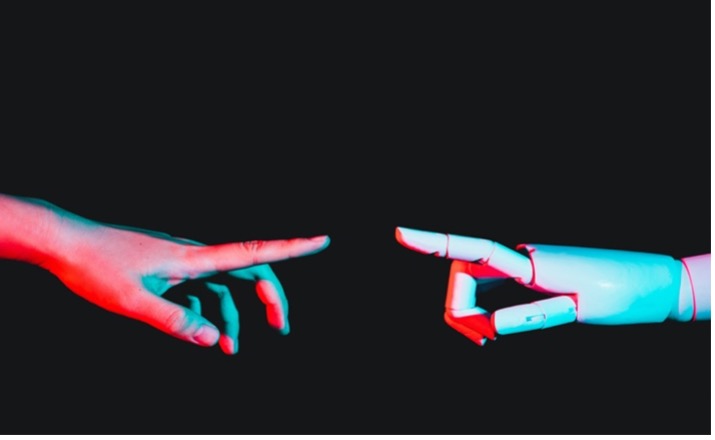
In an era where artificial intelligence (AI) shapes everything from healthcare to entertainment, it’s no surprise that its influence is seeping into the most intimate corners of human life: love and relationships. From matchmaking algorithms to AI companions, technology is redefining how we connect, communicate, and even experience affection. But can machines ever truly grasp the complexity of love—or are they simply mirroring what they’ve learned? Let’s explore the evolving relationship between AI and love.
1. AI as the Modern Matchmaker
Dating apps like Tinder, Bumble, and Hinge have long relied on algorithms to pair potential partners. These platforms analyze user data—swipe patterns, interests, and even conversational habits—to predict compatibility. Newer apps, such as AIMM (Artificial Intelligence Matchmaking), take this further by using voice recognition and personality assessments to curate matches. While these tools streamline the search for love, they raise questions: Can an algorithm capture the intangible “spark” between two people? Or does reducing romance to data points risk oversimplifying human connection?
2. AI Companions: Love in the Digital Age
For some, AI isn’t just a matchmaker—it’s the partner. Apps like Replika and platforms like ChatGPT enable users to build relationships with chatbots designed to mimic empathy and emotional depth. These AI companions learn from interactions, adapting their responses to provide comfort, advice, or even flirtation. In Japan, virtual influencers like Hatsune Miku have sparked debates about parasocial relationships, while startups are developing holographic partners equipped with emotional intelligence.
Critics argue these relationships are one-sided, yet users often report genuine emotional relief. For those struggling with loneliness or social anxiety, AI offers a judgment-free space to practice vulnerability. Still, the ethical dilemma remains: Can a machine that doesn’t “feel” truly reciprocate love, or is it merely reflecting programmed empathy?
3. Decoding Emotions: AI’s Role in Relationship Health
Beyond companionship, AI tools are helping couples navigate real-world relationships. Apps like Lasting and Paired use machine learning to analyze communication patterns and offer personalized advice for resolving conflicts. Sentiment analysis algorithms scan text messages to flag toxic behavior, while wearable devices track physiological responses during arguments (e.g., elevated heart rates) to encourage calmer dialogue.
These innovations position AI as a relationship coach, but they also highlight a paradox: Can technology designed to optimize efficiency foster the messy, unpredictable growth that love often requires?
4. The Ethical Tightrope
As AI integrates deeper into romantic lives, ethical concerns multiply. Privacy is paramount—dating apps and chatbots collect vast amounts of sensitive data, risking breaches or misuse. Emotional dependency is another issue: Can over-reliance on AI stifle human connection? And what happens when biases in training data reinforce harmful stereotypes about love and gender roles?
Moreover, the rise of deepfake technology and hyper-realistic AI avatars blurs the line between reality and simulation, challenging our understanding of consent and authenticity in relationships.
5. The Future of Love and AI
Looking ahead, the fusion of AI and love will likely grow more nuanced. Imagine AI therapists mediating couples’ counseling, or neural networks predicting long-term compatibility with eerie accuracy. Yet, the core question persists: Can love, with all its irrationality and depth, ever be fully quantified or replicated?
Perhaps the answer lies in balance. AI can enhance relationships—by breaking down communication barriers, offering insights, or providing companionship—but it cannot replace the raw, imperfect beauty of human connection. Love thrives in shared vulnerability, spontaneity, and mutual growth—qualities no algorithm can manufacture.
Conclusion: Coexistence, Not Competition
AI is reshaping love, but it doesn’t have to diminish it. By embracing technology as a tool rather than a substitute, we can harness its potential to deepen understanding and foster connections. After all, love isn’t about perfection—it’s about two people (or perhaps, one person and an algorithm) navigating the chaos together.
As we step into this brave new world, let’s ensure that the heart remains at the center of the story—even if Silicon Valley is writing part of the script.
What are your thoughts? Could you see yourself trusting AI with matters of the heart—or is love one frontier technology should never cross? Share your perspective below. 💬🤖❤️

 MindCanvas UI/UX Designs